What Is OpenGPU Network? A Complete Guide to Decentralized GPU Compute
OpenGPU Network is a decentralized GPU routing layer that connects AI workloads with idle GPU resources worldwide. Learn how it works, why it matters, and how you can participate.
The GPU Bottleneck Problem
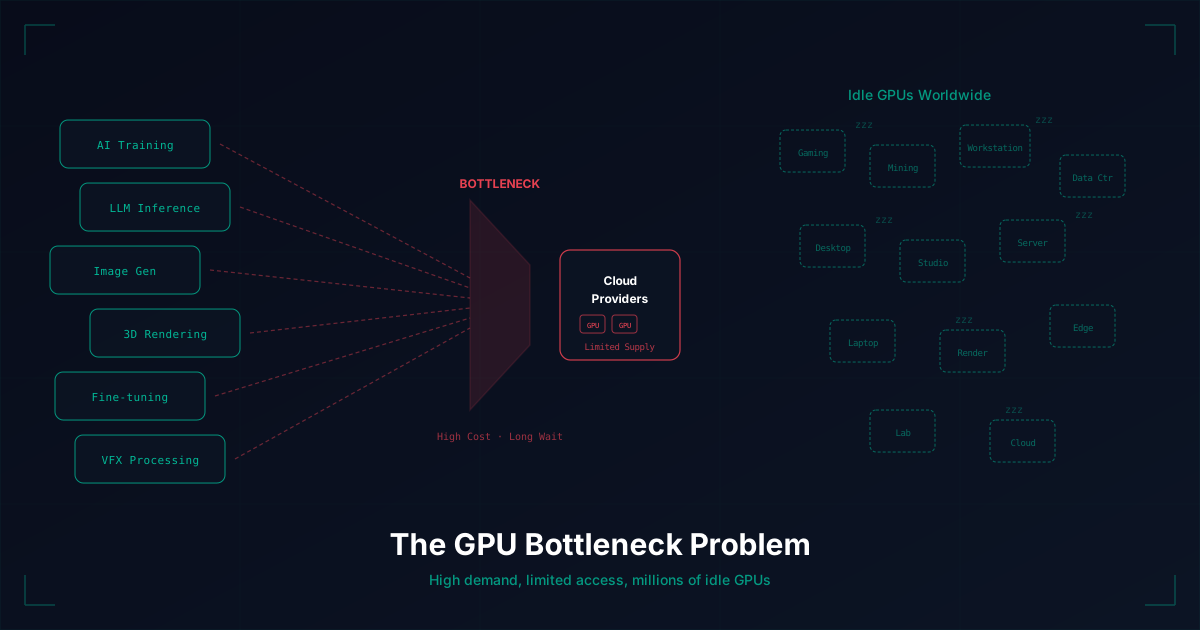
Artificial intelligence is advancing faster than the infrastructure supporting it. Every major AI model — from large language models to image generators — depends on GPUs for training and inference. Yet access to GPU compute remains concentrated in the hands of a few cloud providers. The result is predictable: long wait times, rising costs, and a growing divide between organizations that can secure compute and those that cannot.
Meanwhile, millions of GPUs around the world sit idle. Gaming rigs, workstations, mining farms, and small data centers all have spare capacity that goes unused. OpenGPU Network was built to bridge this gap — connecting those who need GPU power with those who have it to spare.
What Is OpenGPU Network?
OpenGPU Network is a decentralized GPU routing layer designed for AI and high-performance workloads. Think of it as a global coordination system that automatically matches compute demand with available GPU supply — without relying on a single centralized provider.
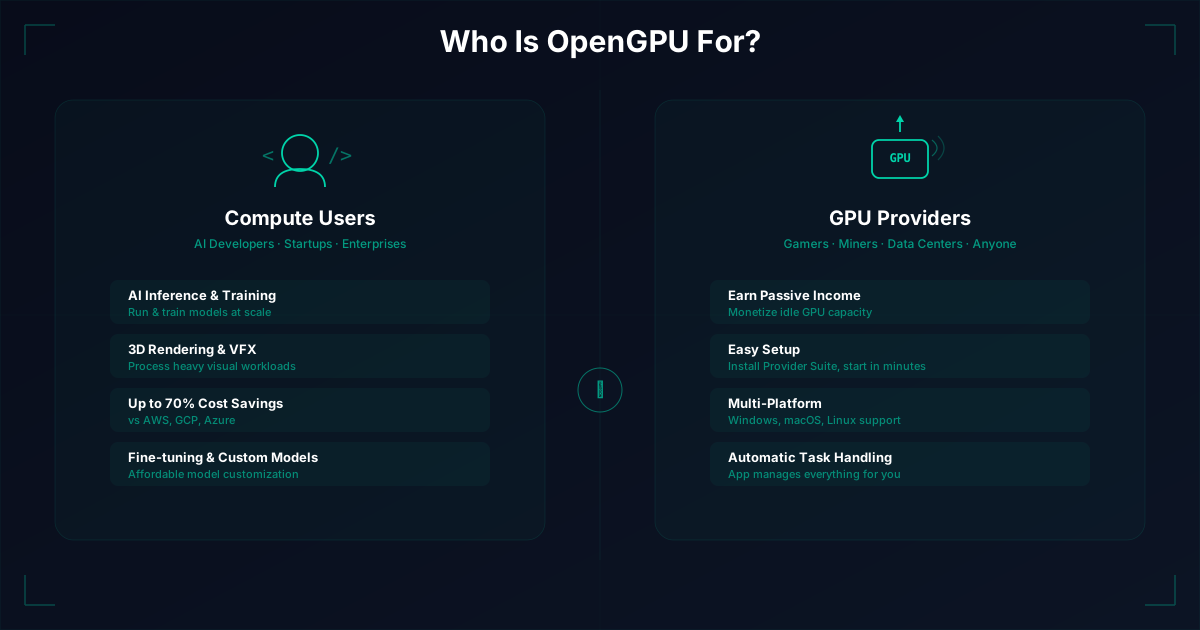
At its core, OpenGPU operates on three principles: accessibility (anyone with a compatible GPU can become a provider), efficiency (workloads are routed to the best available resource automatically), and cost reduction (by tapping into distributed supply, users can access compute at up to 70% lower cost than traditional cloud services).
A data center without walls — that is the simplest way to describe what OpenGPU is building.
How Does OpenGPU Work?
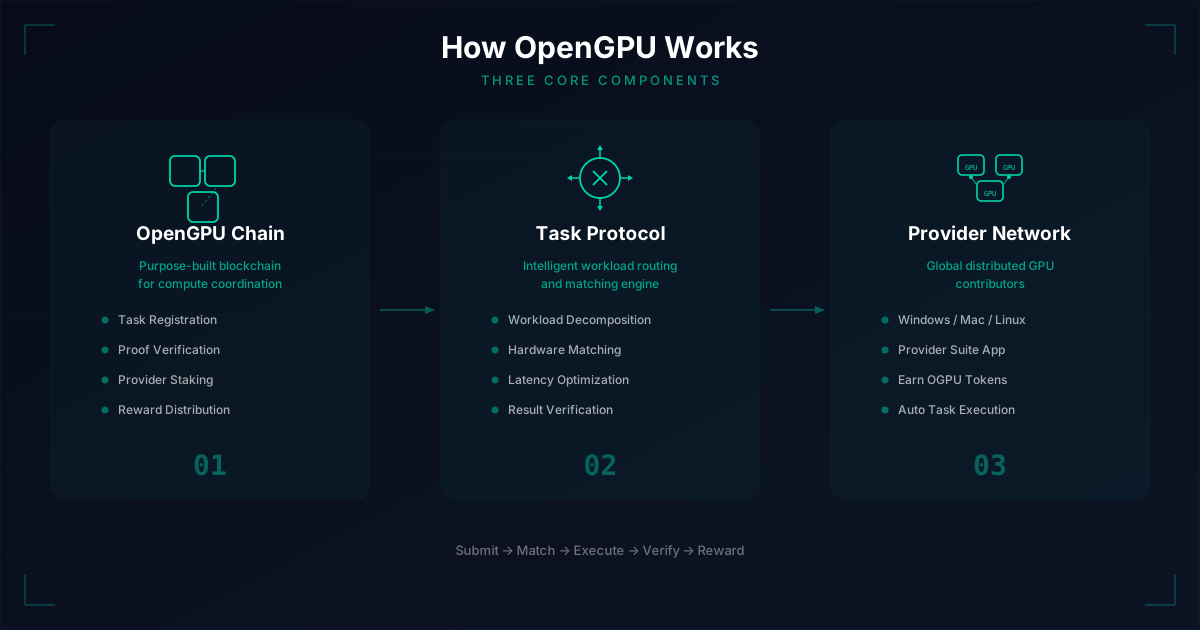
The network consists of three main components that work together to route and verify GPU workloads:
1. The OpenGPU Chain
OpenGPU runs on its own purpose-built blockchain. This chain handles task registration, proof verification, provider staking, and reward distribution. It is designed specifically for compute coordination — not general-purpose smart contracts. This specialization allows it to process task proofs efficiently without the congestion issues seen on general-purpose chains.
2. The Task Protocol
When a user submits a workload (such as AI inference, model training, or rendering), the task protocol breaks it down, matches it with available providers based on hardware requirements and latency, and routes it accordingly. Once the task is completed, the result is verified on-chain before rewards are distributed.
3. The Provider Network
Providers are individuals or organizations that contribute GPU resources to the network. By running the OpenGPU Provider Suite, they make their hardware available for tasks and earn OGPU tokens in return. The network currently supports Windows, macOS, and Linux, making it accessible to a wide range of hardware setups.
What Is the OGPU Token?
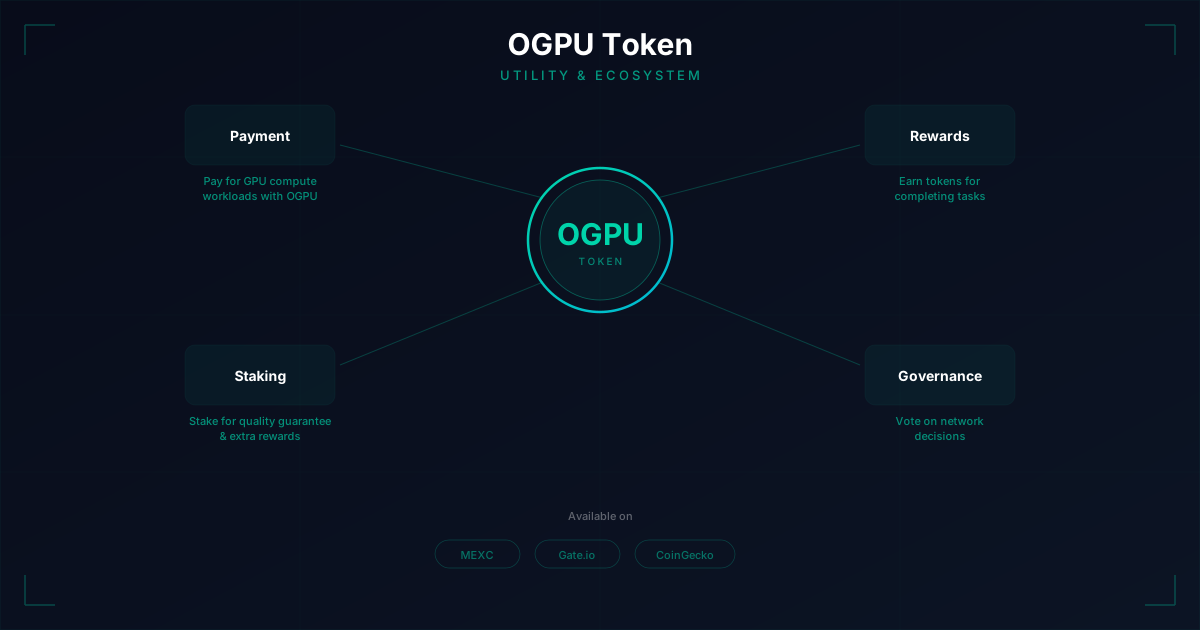
OGPU is the native utility token of the OpenGPU Network. It serves multiple purposes within the ecosystem:
Payment for compute: Users pay for GPU workloads using OGPU tokens. Provider rewards: Providers earn OGPU tokens for completing tasks successfully. Staking: Providers stake OGPU to guarantee service quality and earn additional rewards. Governance: Token holders can participate in network decisions as the protocol matures.
OGPU is available on exchanges including MEXC and Gate.io and can be tracked on CoinMarketCap and CoinGecko.
Who Is OpenGPU For?
OpenGPU serves two main groups. For AI developers, startups, and enterprises: If you need GPU compute for inference, training, fine-tuning, or rendering, OpenGPU provides an alternative to expensive cloud providers. You get access to a global pool of GPUs at significantly lower costs. For GPU owners: If you have a capable GPU that is not running at full capacity, you can earn passive income by contributing your idle compute to the network. The Provider Suite app handles everything — you just install it and start earning.
What types of workloads does OpenGPU support?
OpenGPU currently supports AI inference (running trained models to generate predictions or outputs), AI model training and fine-tuning, 3D rendering and VFX processing, and general-purpose GPU compute tasks. The network is designed to be workload-agnostic, meaning new task types can be added as the protocol evolves.
How much does it cost to use OpenGPU?
Pricing on OpenGPU is determined by market dynamics — supply and demand across the provider network. Because the network taps into distributed, often underutilized hardware, costs are typically up to 70% lower than equivalent services from centralized cloud providers like AWS, Google Cloud, or Azure. Exact pricing depends on the workload type, GPU requirements, and current network utilization.
Is OpenGPU secure?
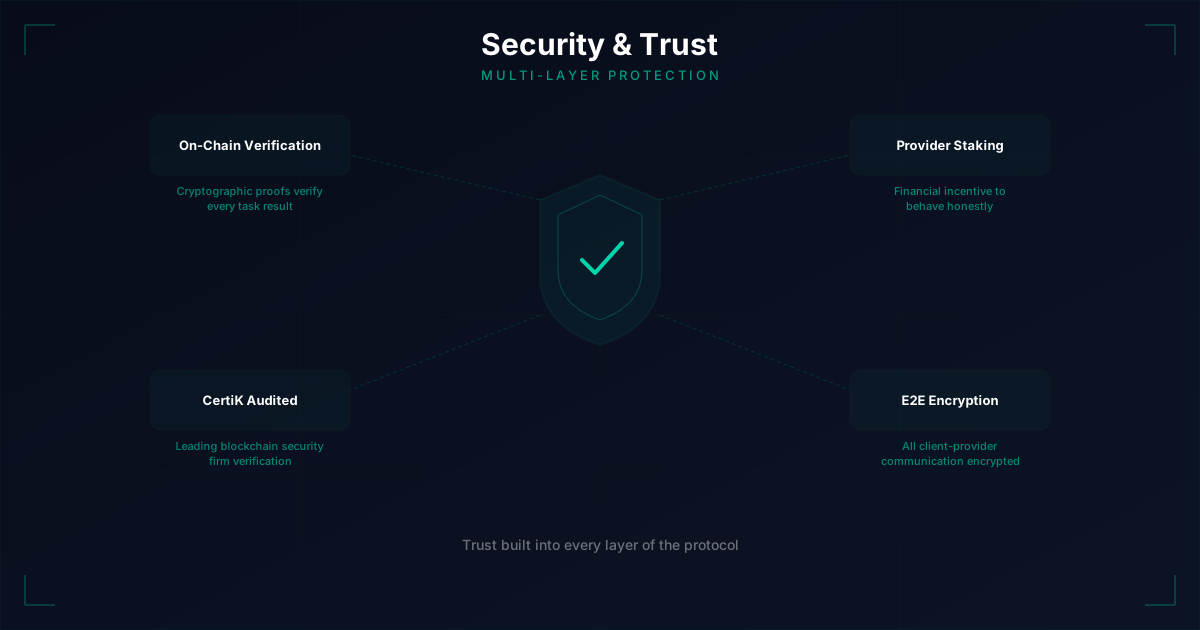
Security is built into multiple layers of the OpenGPU architecture. Tasks are verified on-chain through cryptographic proofs before rewards are released. Providers must stake OGPU tokens, creating a financial incentive to behave honestly. The protocol has been audited by CertiK, one of the leading blockchain security firms. Additionally, all communication between clients and providers is encrypted end-to-end.
How do I become an OpenGPU provider?
Becoming a provider takes just a few minutes. Download the OpenGPU Provider Suite for your operating system (Windows, macOS, or Linux), install it, connect your wallet, and your GPU will start receiving tasks from the network. The app runs in the background and handles task assignment, execution, and reward collection automatically. Visit the Get Started page for step-by-step installation guides.
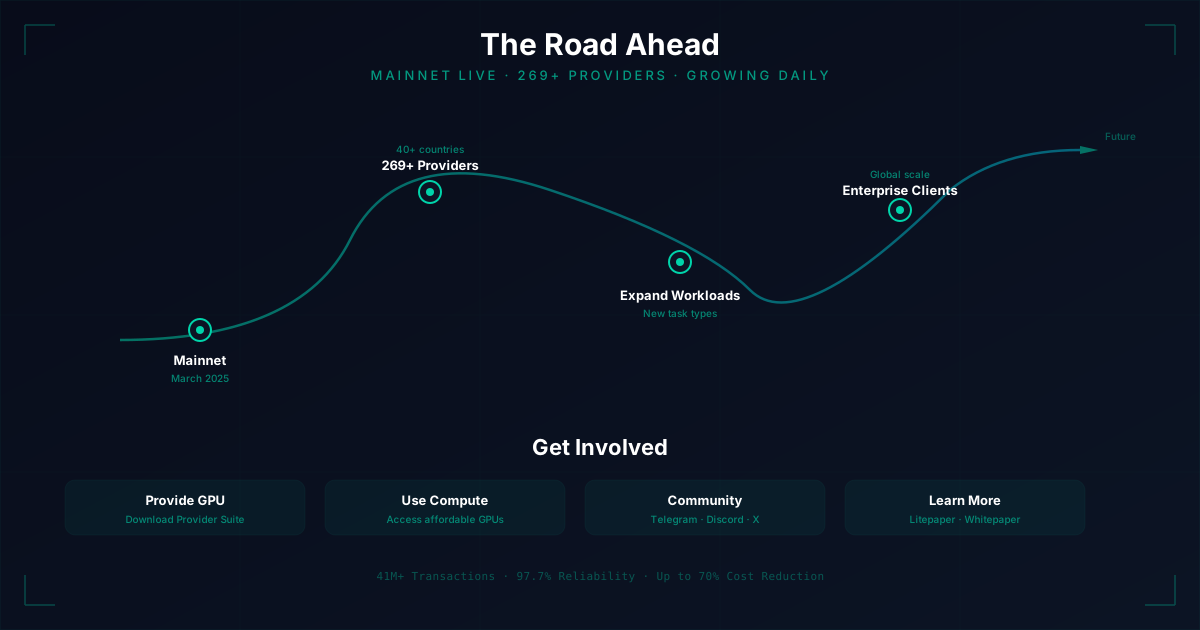
The Road Ahead
OpenGPU Network launched its mainnet in March 2025 and has grown to over 230 providers across multiple countries. The team is focused on expanding workload types, improving routing efficiency, onboarding enterprise clients, and growing the provider network globally.
The vision remains the same as it was from day one: compute should not belong to a handful of companies. It should be an open, globally accessible resource that anyone can tap into — whether you are a solo developer running an AI experiment or an enterprise processing millions of inference requests per day.
Get Involved
Ready to join the decentralized GPU revolution? Here is how you can get started: Provide GPU power — Download the Provider Suite and start earning. Use OpenGPU compute — Access affordable GPU power for your AI workloads. Join the community — Connect with us on Telegram, Discord, and X (Twitter) to stay updated. Learn more — Read the Litepaper and Whitepaper for a deep dive into the protocol architecture.