OpenGPU L1, built forcompute from the ground up
OpenGPU Mainnet
Chain Capabilities

Task data
Transactions carry task metadata, final states, and settlement information so every completed job has a verifiable on chain record.

Compute verification
Execution happens off chain, then the network writes compact proofs and receipts on chain. This keeps verification fast and lightweight.

Provider management
Provider reputation, availability, and incentives are managed by the protocol, which keeps the routing layer in sync with real network health.

Resource optimization
Consensus is aware of how tasks and providers are linked, which helps the network avoid hotspots and make better routing decisions.

High throughput design
The chain is tuned for high frequency micro events rather than heavy smart contract execution. This is what allows around ten thousand task events per second.

EVM compatibility
Developers still use EVM tooling and smart contracts while benefiting from a chain that is built around workloads.
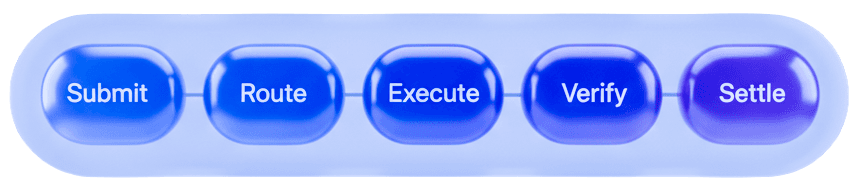
On chain verification pipeline
Submit, route, execute, verify, and settle on chain. A unified workflow that keeps the compute network and the ledger aligned.
Only what matters goes on chain
OpenGPU separates heavy compute from lightweight verification. Models, inputs, and raw outputs stay off chain on providers. The chain only stores the task receipt and proof that it was completed correctly.
On chain: task ID, status, timestamps, provider address, reward data, and protocol level updates.
Off chain:model weights, prompts, files, intermediate tensors, logs, and artifacts.
For Providers
Because verification is compact, the chain is not flooded with large payloads or complex contract calls. Each task adds a small, predictable footprint to the ledger. Verification takes milliseconds, so the network can handle many parallel tasks without creating backlogs. The Lachesis DAG design supports multiple concurrent block lanes, which keeps throughput high even during spikes. Routing logic can trust the chain to be fresh, instead of reading from a slow or congested ledger. OpenGPU network details
OpenGPU Network Details
Mainnet is live and used by the protocol today. Testnet is available for integration, experimentation, and new deployments.

OpenGPU Mainnet
- ConsensusLachesis DAG based protocol
- Throughputaround 10 000 TPS
- Network nameOpenGPU Mainnet
- Chain ID1071
- Currency symbolOpenGPU
- Currency nameOpenGPU
- Decimals18
- RPC URLhttps://mainnet-rpc.ogpuscan.io
- Block explorerhttps://ogpuscan.io
- Block timeunder 1 second
- EVMcompatible
OpenGPU Testnet
- ConsensusLachesis DAG based protocol
- Throughputaround 10 000 TPS
- Network nameOpenGPU Testnet
- Chain ID200820172034
- Currency symbolToGPU
- Currency nameTest OpenGPU
- Decimals18
- RPC URLhttps://testnetrpc.ogpuscan.io
- Block explorerhttps://testnet.ogpuscan.io
- Block timeunder 1 second
- EVMcompatible
ORC 20 token standard
ORC 20 is the main token standard on the OpenGPU blockchain. It extends familiar token patterns with rich, updatable metadata that lives directly on chain.
Rich on chain metadata
ORC 20 tokens can expose descriptions, logos, links, and social handles directly from the chain. Applications can show up to date information without relying only on off chain registries.
As projects evolve, issuers can refresh metadata so holders and users always see the latest story around the asset.
Built for ecosystem tokens
ORC 20 is designed for tokens that live close to compute. Reward tokens, governance assets, and application level tokens can all use the same standard while benefiting from OpenGPU throughput.
This helps explorers, wallets, and dashboards present a consistent view of the ecosystem, with richer context than a basic symbol and name.
Explore the OpenGPU blockchain
View live network activity on the explorer, or connect your wallet to start building and interacting with the ecosystem.